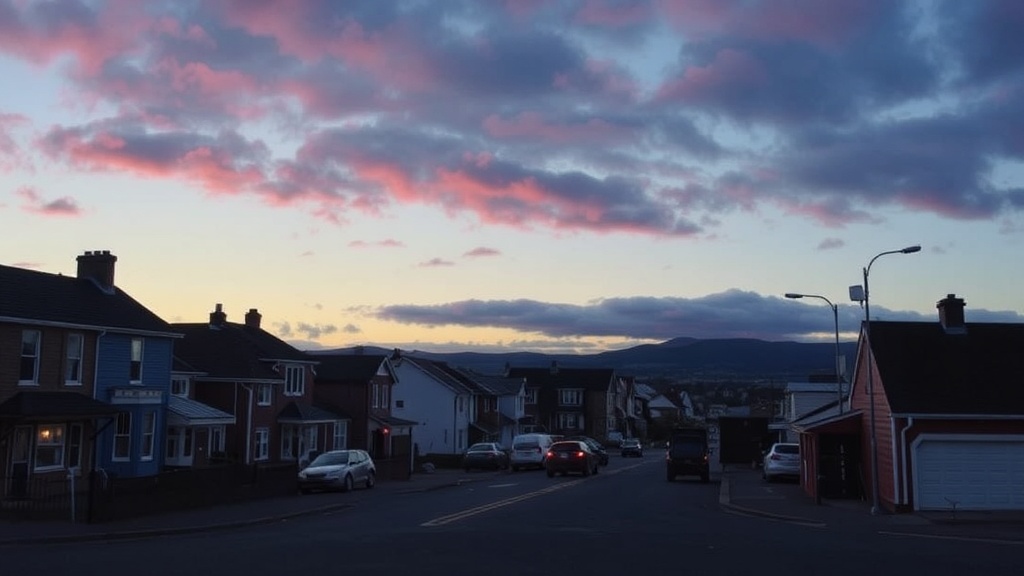
5 Stjohns Neighbourhoods That Define Local Life

Downtown & Jellybean Row
Quidi Vidi Village
The Battery
Georgestown
Churchill Square
This post breaks down five Stjohns neighbourhoods that shape how locals actually live — where we walk our dogs, buy groceries, and bump into neighbours at the rink. Whether you're house-hunting, curious about your own backyard, or just want to understand what makes our community tick, these are the places that matter.
What is the oldest residential neighbourhood in Stjohns?
Georgestown holds that title — a tight grid of narrow streets just west of Military Road that has been home to Stjohns residents since the early 1800s. Walking through Georgestown feels like stepping into a different era. The rows of attached houses, many painted in bright yellows, reds, and blues, sit shoulder-to-shoulder along sidewalks that were designed long before cars took over the city. Gower Street and Carrickmacross Lane wind through the neighbourhood like arteries, connecting families who've lived here for generations with newcomers discovering the area's charm.
Locals here know their mail carriers by name. The neighbourhood association — one of the most active in Stjohns — organizes everything from winter potlucks to spring cleanups. You're never more than a five-minute walk from Bannerman Park, which means summer evenings often end up on the grass with a picnic or a pickup game of soccer. The Basilica Cathedral of St. John the Baptist looms nearby, its spire visible from most front porches. The catch? Parking can be a nightmare. Streets here weren't built for SUVs, and snow clearing in winter requires a level of patience that not everyone possesses.
Still, Georgestown represents something important about Stjohns. It's a place where heritage isn't just preserved in museums — it's lived in. Students from Memorial University rent rooms in century-old homes with original crown moulding and clawfoot tubs. Young professionals buy fixer-uppers and restore woodwork over weekends. Retirees tend gardens that have been in their families for generations. Corner stores operate out of converted front rooms. It's messy, beautiful, occasionally noisy, and unmistakably local.
Where can you find the most iconic harbour views in Stjohns?
The Battery, tucked beneath Signal Hill at the narrows of Stjohns Harbour, offers the most dramatic and photographed views in the entire city. This isn't a neighbourhood you drive through on your way somewhere else — it's a destination, and the people who live there treat it that way. From almost any window, you can watch the ferry cross the harbour, icebergs drift past in late spring, or the sun rise over the Narrows on a clear morning.
The houses here cling to the rock face like barnacles. Brightly coloured saltbox homes line roads so steep that winter walking can feel like an extreme sport. (Locals joke that you don't need a gym membership when you live on Battery Road.) The community is small — maybe a few hundred people — but the identity is enormous. Everyone knows the story of the Rooms overlooking the harbour, but Battery residents see that view every morning with their coffee, fog or shine. Fishermen still maintain stages along the water, hauling gear up from small boats just as their grandfathers did.
What makes The Battery special isn't just the scenery. It's the resilience. Fog rolls in without warning. Salt spray corrodes siding. Snowplows sometimes can't make it down the narrow lanes before noon. Yet families stay for generations. Artists set up easels on the wharf when the sun breaks through. That said, it isn't an easy place to live — and Battery residents wouldn't have it any other way. There's a pride here that you can't manufacture. It's built into the bedrock.
Which Stjohns neighbourhood feels like a village within the city?
Quidi Vidi Village sits inside the eastern edge of Stjohns like a time capsule, a working fishing village surrounded by city limits on three sides. If Georgestown is old Stjohns and The Battery is dramatic Stjohns, Quidi Vidi is the Stjohns that refuses to change — and the community fights hard to keep it that way. The lake itself — Quidi Vidi Lake — is a local landmark, hosting the annual Royal St. John's Regatta, the oldest organized sporting event in North America.
The harbour here — known locally as The Gut — still hosts a working fishing fleet. You can buy fresh cod from fishers unloading their catch on the wharf on any given morning. The Quidi Vidi Brewery operates out of a former fish processing plant, drawing locals for pints of Iceberg Beer and community events that feel more like kitchen parties than corporate promotions. Nearby, the Quidi Vidi Plantation arts centre gives studio space to traditional craftspeople — potters, weavers, and furniture makers who keep Newfoundland techniques alive in a modern context. Walking trails circle the lake, packed with runners and dog walkers from dawn until dusk.
Housing in Quidi Vidi is limited and fiercely protected. Most homes have been in families for decades. New construction is rare. The result is a neighbourhood that feels removed from the rest of the city — even though Downtown Stjohns is only a ten-minute drive away. Worth noting: the village gets busy on weekends, especially when the craft market is open or the brewery is hosting live music. But weekdays belong to the locals — dog walkers, retired fishers, and the artists who've claimed this pocket of the city as their own. It's quiet. It's stubborn. It's exactly what it wants to be.
What is the most family-friendly neighbourhood in Stjohns?
Churchill Square and the surrounding West End consistently rank as the go-to area for young families who want space, schools, and convenience without leaving the city. This is suburban Stjohns — but not the sprawling kind you find hours outside the capital. Streets are wide, yards are decent-sized, and you're never far from a grocery store or a soccer field. The area stretches from Kenmount Road out toward the Parkway, covering a mix of post-war bungalows and newer developments.
The square itself acts as an unofficial town centre for the area. You'll find parents with strollers grabbing coffee at nearby cafés, teenagers meeting up at the mall, and seniors doing their shopping at the Dominion or Sobeys just up Kenmount Road. Schools like St. John Bosco and Gonzaga High School serve the neighbourhood, which means kids often walk or bike to class instead of relying on buses. Recreation centres and hockey rinks are within easy reach, so winter weekends here are packed with practices and tournaments. The YMCA on Newfoundland Drive draws families for swimming lessons and gym programs.
Here's the thing about the West End: it doesn't try to be trendy. There are no heritage designation signs or boutique hotels. Instead, you get reliable Metrobus routes, accessible healthcare at the nearby clinic, and neighbours who organize Halloween block parties that half the community attends. For families priced out of the housing market in other parts of Stjohns, Churchill Square still offers a realistic entry point — though prices have climbed here too in recent years. It's practical. It's friendly. It works.
Where do artists and long-time residents mix in Stjohns?
Rabbittown — bordered by Merrymeeting Road, Empire Avenue, and Freshwater Road — has become the city's most interesting collision of old and new. This working-class neighbourhood, named for the rabbits that once populated the area when it was farmland outside the city core, is now one of the most creative pockets in Stjohns. The name itself tells you something about how the city has grown — what was once the edge of town is now firmly in the centre.
The housing stock is varied and unpretentious. You'll find small wooden homes built for railway workers sitting next to recently renovated properties with modern siding and ambitious vegetable gardens. Rabbittown Theatre — housed in the old St. Pat's Parish Hall — puts on productions that draw crowds from across the city. Local artists have opened studios along the side streets. Musicians practice in basements. The community garden on Empire Avenue fills up every spring with locals growing tomatoes, peas, and potatoes in raised beds. Art shows pop up in living rooms. Porch concerts happen on summer evenings.
What makes Rabbittown work is that newcomers haven't pushed out the old guard. Long-time residents still run the community centre and organize the annual clean-up days. Young renters and first-time homeowners add energy without erasing the neighbourhood's character. You'll see a retired mechanic chatting with a ceramicist over the fence. Kids play street hockey on roads that haven't changed in fifty years. That balance is hard to find in any city — and in Stjohns, Rabbittown seems to have figured it out without trying too hard.
How the neighbourhoods compare
| Neighbourhood | Best for | Housing style | Walkability |
|---|---|---|---|
| Georgestown | History lovers, park access | Attached heritage homes | High |
| The Battery | Harbour views, tight community | Saltbox homes on steep grades | Moderate |
| Quidi Vidi Village | Village atmosphere, arts and crafts | Traditional fishing homes | Moderate |
| Churchill Square | Families, schools, convenience | Detached suburban homes | Moderate to high |
| Rabbittown | Artists, first-time buyers | Mixed working-class housing | High |
Every neighbourhood in Stjohns tells a different story about who we are and how we live. Some are frozen in time. Others are changing fast. The best part? You don't have to choose just one. Our community is small enough that crossing from Georgestown to Quidi Vidi takes less than twenty minutes — yet each place feels like its own world. That's the thing about living here. Stjohns isn't one neighbourhood. It's a patchwork of places, and we're all lucky to be woven into it.