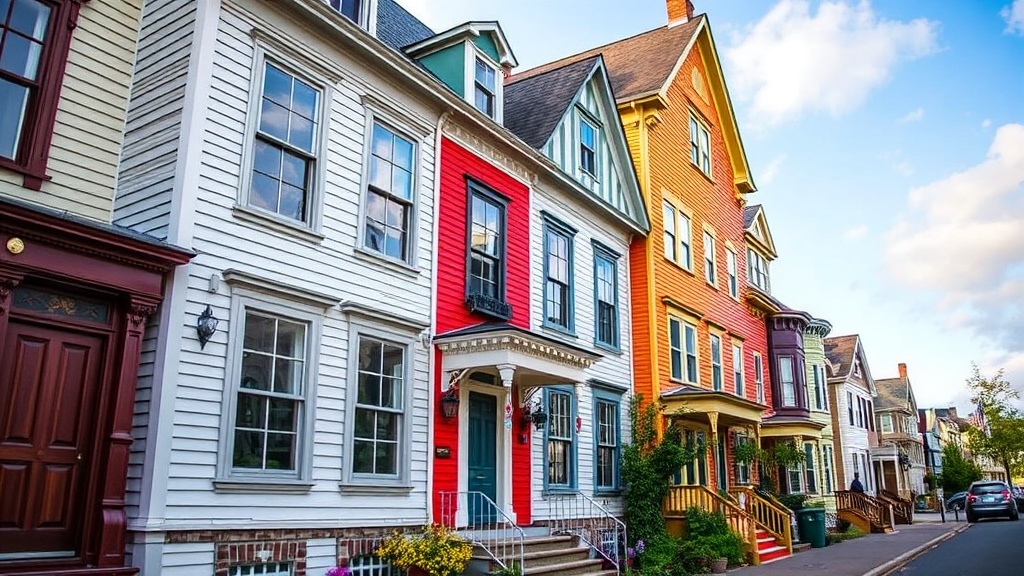
Exploring Jellybean Row: A Colourful Walking Guide to St. John's Historic Houses

Jellybean Row isn't just a pretty backdrop for tourist photos—it's one of the most distinctive architectural features in North America. This walking guide covers the best streets to explore, the history behind those iconic colours, where to grab coffee between stops, and how to experience these heritage homes like a local rather than a tour bus passenger. Whether you're visiting St. John's for the first time or you've walked past these houses a thousand times without really looking, here's everything worth knowing about the city's most photographed neighbourhood.
What Is Jellybean Row and Where Did the Name Come From?
The term "Jellybean Row" refers to the brightly painted Victorian row houses clustered mainly in downtown St. John's—specifically in the East End, Rabbittown, and along Gower Street, Colonial Street, and nearby lanes. The name stuck sometime in the 1990s (nobody's quite sure who coined it first), comparing the multi-coloured facades to a handful of jellybeans scattered across the hillside.
Here's the thing—the colours weren't originally about tourism. St. John's was devastated by the Great Fire of 1892, which levelled most of downtown. When residents rebuilt using local materials like wood and brick, they needed something to protect the wood from salt air and harsh North Atlantic weather. Paint was the answer—and since fishermen and dockworkers often had leftover boat paint, they used whatever colours were available. Bright yellows, deep reds, forest greens, and cobalt blues all made their way onto house exteriors.
Over time, what started as practical became cultural. Today, choosing a house colour in these neighbourhoods isn't just about aesthetics—it's a statement. Some homeowners coordinate with neighbours. Others deliberately clash. Either way, the result is a streetscape unlike anywhere else in Canada.
Which Streets Offer the Best Jellybean Row Walking Route?
Gower Street between Cathedral Street and Bannerman Street delivers the most concentrated stretch of classic Jellybean Row houses—plan to spend at least 45 minutes on this single stretch alone.
The ideal walking loop starts at The Rooms (the provincial archives and art gallery perched on the hill) and works downhill toward Water Street. This direction saves your knees and gives you that classic "descending into the candy-coloured valley" view that photographers chase.
Phase 1: Gower Street (The Main Attraction)
Begin at the intersection of Gower and Cathedral. The mustard-yellow house at 124 Gower (with its distinctive green trim) has appeared in tourism campaigns for two decades. Don't just look at the front—peek down the narrow laneways between houses. Many have painted their rear sheds and garages to match, creating colour corridors most tourists miss.
The catch? Gower Street is residential. These are people's homes, not museum exhibits. Keep voices down. Don't lean on fences. The best photos are taken from across the street anyway—better angle, better light, and you're not standing in someone's flower bed.
Phase 2: Colonial Street and the Side Lanes
Turn right onto Colonial Street. This stretch feels more lived-in than Gower—less polished, more authentic. You'll see laundry on lines, kids' bikes on porches, and pickup trucks parked tight against narrow sidewalks. The houses here date from 1895 to 1910, mostly built by merchant families who could afford brick foundations with wooden upper stories.
Duck down Hayward's Lane—a narrow pedestrian cut-through connecting Colonial to Duckworth. The walls here are covered in murals commissioned by the City of St. John's, separate from Jellybean Row but complementary. Good spot for a sandwich from Fixed Coffee on Duckworth if you packed one.
Phase 3: Rabbittown (If You Have Energy Left)
Rabbittown sits west of downtown proper—about a 15-minute walk from the Gower Street core. The name comes from the 19th-century practice of raising rabbits in backyard hutches (some locals still keep them). The houses here are slightly more modest—smaller lots, closer together, colours more faded and weather-beaten.
Worth noting: Rabbittown feels less touristy because tour buses can't easily navigate the narrow streets. You'll likely have the sidewalks to yourself. The Rabbittown Cafe on Monkstown Road makes an excellent fish cake—worth the detour.
| Street/Area | Best For | Walking Difficulty | Time Needed |
|---|---|---|---|
| Gower Street | Classic photos, dense colour concentration | Moderate (steep hills) | 45-60 min |
| Colonial Street | Authentic neighbourhood feel | Easy | 20-30 min |
| Hayward's Lane | Murals, quiet shortcuts | Easy (pedestrian only) | 10 min |
| Rabbittown | Local atmosphere, fewer tourists | Moderate | 30-45 min |
Why Are the Houses Painted Such Bright Colours?
Beyond the practical origins (leftover boat paint), the colour tradition persisted because it serves a genuine purpose—combating seasonal affective disorder during Newfoundland's long, grey winters. Average annual sunshine in St. John's sits at roughly 1,500 hours (compare that to Toronto's 2,000+). When February fog rolls in and doesn't lift for weeks, that bright orange house across the street becomes surprisingly important for mental health.
Local paint stores stock colours you won't find in mainland Canadian markets. Benjamin Moore's "Newfoundland Orange" (not an official name, but that's what locals call it) moves more units here than anywhere else in the country. Cabot Stain—a brand rarely seen west of Quebec—dominates exterior sales because it holds up against salt spray.
That said, there are unwritten rules. Heritage preservation guidelines (administered by the Heritage Foundation of Newfoundland and Labrador) encourage historically appropriate palettes. Neon pink generally won't fly in the heritage district—though you'll see it in less regulated areas. Homeowners often consult colour historians before repainting. Yes, that's a real job here.
Where Should You Eat and Drink Along the Route?
Walking Jellybean Row works up an appetite—the hills are steeper than they look. Fortunately, some of St. John's best food sits within blocks of the main route.
Fixed Coffee + Baking (Duckworth Street, just south of Colonial): Locals line up for the sourdough donuts and properly pulled espresso. Small space—if it's packed, order to-go and eat on the Harbourfront boardwalk, five minutes downhill.
Chinched (Bates Hill, off Gower): Specializes in house-made charcuterie and local beer. The cured pork belly sandwich has been on the menu since 2011 for good reason. Reservations recommended for dinner, but lunch usually has walk-in space.
The Merchant Tavern (Water Street, at the bottom of the hill): Higher-end option in a restored 1919 bank building. Excellent seafood tower featuring local crab, lobster, and cod. Pricey, but the building itself is worth seeing—original marble columns, restored tin ceiling.
For something quicker, Portia's Bakery on Queen Street does toutons (fried bread dough, traditional Newfoundland breakfast food) until 11 AM. Get them with molasses—don't argue, just do it.
When's the Best Time to Visit and Photograph Jellybean Row?
September through early October offers ideal conditions—stable weather, late-day light that hits the hillside at dramatic angles, and cruise ship crowds have thinned. Morning fog (common in July and August) can actually enhance photos by softening the colours and adding atmosphere.
Midday summer sun is harsh and flat—avoid it. Golden hour (roughly 7:30-8:30 PM in midsummer, earlier in fall) transforms the eastern-facing Gower Street houses. The reds glow. The yellows practically hum. If you're serious about photography, bring a polarizing filter to cut through the salt haze that hangs over the harbour.
Winter has its own appeal. Snow piles high against the colourful bases, creating contrast you won't see in promotional brochures. Just wear proper boots—these hills turn to ice. Sorel Caribou boots or equivalent are standard local issue, not fashion statements.
"We don't paint them bright for tourists. We paint them bright so we can find our own houses in the fog." — Overheard at The Ship Pub, 2023
What Should You Know About Respecting Residents?
This bears repeating: Jellybean Row houses are private homes, not attractions. The families living in these buildings deal with constant foot traffic, cameras pointed at their windows, and occasionally tourists trying doorknobs (yes, really).
Basic decency applies. Don't block driveways. Don't photograph people on their porches without asking. If a homeowner is outside, a friendly nod is fine—chatting is at their discretion, not yours. Many are tired of being treated like zoo exhibits.
Here's the thing—parking is also tight. Don't assume you can stop to snap photos from your car. Gower Street has active parking enforcement, and rental cars with out-of-province plates are easy targets. Use the Harbourfront parking garage on Water Street and walk up. Your calves will complain, but your wallet won't.
Finally, resist the urge to Instagram every house with a "cute" caption about how you want to move here. Housing affordability in St. John's has become a genuine crisis—short-term rentals and Airbnbs have displaced long-term residents in these exact neighbourhoods. Celebrating the aesthetic while ignoring the housing context feels tone-deaf to locals who've been priced out of their own downtown.
How Do Jellybean Row Houses Compare to Other Canadian Heritage Architecture?
Unlike Montreal's grey stone Victorians or Vancouver's Craftsman bungalows, St. John's row houses represent a distinctly Atlantic Canadian adaptation to harsh maritime conditions. The Second Empire and Queen Anne architectural styles arrived here from England, but local builders modified them—steeply pitched roofs shed heavy snow, narrow lots maximized limited flat land near the harbour, and wooden construction made sense when stone had to be imported.
The colour aspect is uniquely Newfoundland. You won't find this concentration of saturated exterior paint in Lunenburg, Nova Scotia (famous for its own colourful waterfront, but more uniform). You won't find it in Quebec City's Old Town (regulated heritage palettes, mostly earth tones). Even Newfoundland's own rural outports—while colourful—don't match the density and architectural consistency of downtown St. John's.
If you're interested in the broader context of Newfoundland vernacular architecture, the Heritage Foundation's website maintains detailed records of registered heritage structures, including many Jellybean Row houses with documented construction dates and original owners.
Walking Jellybean Row properly takes half a day if you do it right—lingering, reading heritage plaques, stopping for coffee, chatting with shop owners. Rush it in an hour and you'll have photos but no understanding. These houses have survived fires, economic collapse, and a century of North Atlantic weather. They deserve your full attention.