How to Make Your Voice Heard at Stjohns City Hall

When and Where Does Stjohns City Council Meet?
Stjohns City Council gathers every Monday at 4:00 PM in the Council Chambers at City Hall on New Gower Street. Most meetings are open to the public, and there's no admission fee or registration required simply to observe. The council operates on a committee system, meaning specialized committees — Planning and Development, Public Works, Finance and Administration, and Protective Services — often meet earlier in the afternoon at 2:00 PM or 2:30 PM. These committee meetings are where the real debate happens. That's where councilors hash out the details, challenge staff recommendations, and occasionally send proposals back for revision before bringing finalized recommendations to the full council for a vote.
You don't need to commit to four-hour marathons every week, either. Council publishes its agenda online every Friday afternoon through the City of St. John's website. Skimming these PDF documents takes ten minutes and tells you exactly what's being decided the following Monday. Is your street scheduled for water main work? Is that heritage building on Military Road up for demolition approval? Are developers seeking variances to build higher than zoning allows near The Rooms? The agenda reveals everything, complete with staff reports that explain the rationale behind each recommendation and sometimes include maps, architectural drawings, and cost estimates.
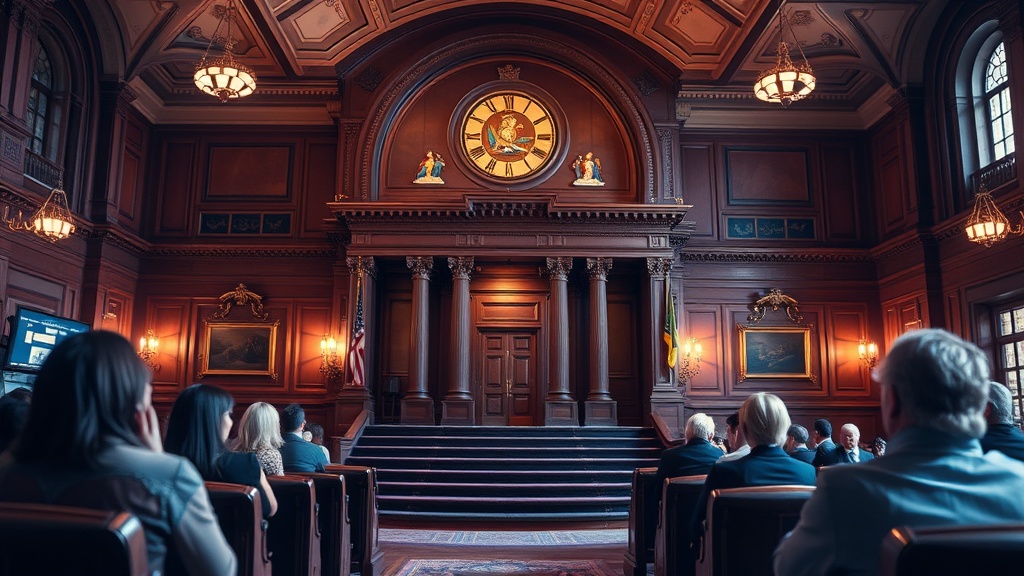
Council breaks for summer recess, typically from mid-July through late August, and takes extended recess during the Christmas holidays. Special meetings get called for urgent matters — like the emergency sessions during the record-breaking January 2020 snowstorm that buried Churchill Square and left residents stranded for days — and these follow the same public access rules. There's no secret handshake or backroom deal required to attend. You walk in, sign the attendance sheet at the clerk's desk, and take a seat in the public gallery overlooking the semi-circular council table where decisions affecting our daily lives get made.
How Can Residents Speak at Stjohns Public Meetings?
Here's where many Stjohns residents get stuck. They attend a meeting, sit through two hours of zoning variances and contract approvals, and never realize they could have addressed council directly during the designated public presentation period. Speaking at City Hall requires advance planning, but the administrative process is simpler than registering your car at the Motor Registration Division.
To speak at a regular council meeting, you must contact the City Clerk's office by noon on the Thursday before the Monday meeting. Email works best — clerks@stjohns.ca — and your message should include your full name, residential address within city limits, phone number, and a brief description of what you want to discuss. You can speak on any item appearing on that week's published agenda, or on "general matters" affecting the city that might not be specifically listed. Each speaker receives ten minutes at the podium, though council routinely extends this courtesy for complex issues involving multiple stakeholders or technical details.
The protocol feels formal but shouldn't intimidate residents. When the mayor (currently Danny Breen) calls your name, you approach the wooden podium facing the semi-circular desk where nine elected officials sit — the mayor and eight councilors representing our city's five wards. State your name and address clearly for the official record, then make your case using facts, personal experience, and specific requests. Councilors might ask clarifying questions when you finish, though they won't debate your opinions directly during public presentations. It's not a dialogue or argument — it's structured testimony designed to gather input. That said, respectful, well-researched presentations frequently sway votes. Councilors remember constituents who show up prepared with documentation, photographs of problem areas, or letters of support from neighbours.
For planning and development issues — like that controversial apartment building proposed near Quidi Vidi Lake or commercial development along Duckworth Street — public hearings follow slightly different procedural rules. These hearings get advertised with yellow signs posted at the physical property site and written notices mailed to residents within a specified radius. You can speak at the hearing without pre-registering, though signing up in advance helps the clerk estimate timing and ensures you get heard before council moves to the next item. These sessions often draw standing-room-only crowds when high-profile developments threaten established neighbourhoods, so arrive early, bring written copies of your remarks for the clerk, and practice your key points to stay within time limits.
What Issues Can You Actually Influence at Stjohns City Hall?
Not everything is negotiable, and understanding the boundaries saves frustration. Collective agreements with city unions (CUPE, NAPE, and the St. John's Fire Fighters Association), procurement contracts exceeding certain dollar thresholds, and active legal matters get discussed in private "in camera" sessions closed to the public under provincial law. But the list of influenceable issues stretches longer than most residents assume, touching nearly every aspect of our shared infrastructure and community life.
Zoning changes represent the single most common reason Stjohns residents appear before council. When a developer wants to convert a heritage home on Gower Street into professional offices, build a multi-unit dwelling in a traditionally single-family neighbourhood like Rabbittown, or establish a commercial operation in a residential zone, council must approve the rezoning through a public process. These decisions shape our community's character for decades. Residents who organize effectively — presenting petitions signed by neighbours, coordinating attendance from multiple households, citing precedents from similar cases in other wards, and proposing alternative solutions — frequently modify proposals or defeat them entirely. Last year, organized opposition from the Heritage Foundation of Newfoundland and Labrador and local residents prevented the demolition of a registered heritage property on Water Street East, demonstrating that persistence pays.
Budget deliberations happen every December over several weeks, and council actively solicits input on spending priorities through public sessions and written submissions. Should we hire additional snow-clearing operators to address our brutal winters? Expand the Team Gushue Highway? Fund expanded programming at the Paul Reynolds Community Centre on Topsail Road? These discussions determine exactly how our property tax dollars get spent and which services get enhanced or cut. The CBC Newfoundland and Labrador frequently covers these budget sessions, and attending in person lets you see which councilors advocate for your priorities and which ones need convincing through constituent pressure.
Infrastructure projects, park improvements, traffic calming measures, and transit route changes all pass through council chambers with opportunities for input. When residents on Campbell Avenue complained about dangerous speeding through their residential neighbourhood last year, their organized delegation to the Public Works committee — complete with traffic data collected by volunteers — resulted in speed humps being installed within three months. The changes don't require a degree in urban planning or engineering — just persistent, polite pressure from engaged citizens who refuse to give up after one meeting.
Beyond the Council Chamber: Other Ways to Engage
Showing up on Monday afternoon isn't the only pathway to participation, nor the most effective for every issue. Stjohns offers multiple advisory committees covering everything from heritage preservation and urban forestry to accessibility issues and emergency management. These volunteer positions require formal applications (typically due in spring for terms beginning in September), but they provide direct input on policy development before it reaches council for final approval. The Heritage Advisory Committee, for instance, reviews every application to alter buildings in our historic districts — including those colourful Jellybean Row houses that tourists photograph from the sidewalk outside The Rooms. Committee members often spot problematic proposals weeks before they reach public council sessions.
Your ward councilor represents roughly 20,000 residents depending on population distribution, and each maintains regular office hours either at City Hall or community locations throughout their ward. A five-minute phone call or thoughtful email often resolves individual issues faster than any formal delegation — a missed garbage collection on your street, a broken streetlight on Empire Avenue, a dangerous ice buildup on sidewalks near Bannerman Park. Councilors want to hear from constituents, particularly when municipal elections approach every four years. They'll escalate issues to city staff and return with answers, sometimes faster than the 311 service line.
Community leagues and neighbourhood associations amplify individual voices through collective action. The Georgestown Community Association, the Churchill Square Neighbourhood Association, the East End Community Association, and similar groups across Stjohns regularly delegate to council on behalf of hundreds of residents. These organizations possess institutional memory spanning decades — they know which arguments worked in 2015 and which councilors respond to specific types of appeals. Joining one connects you to organized advocacy without requiring you to speak publicly yourself or figure out the system alone.
The city also maintains online engagement portals for major capital projects and policy reviews. Recent consultations on the Waterford Bridge Road redevelopment, the downtown bike lane pilot project, and the Williams Brook Stormwater Management Pond collected thousands of responses from residents who couldn't attend in-person sessions. These surveys genuinely influence decisions — staff report response statistics and demographic breakdowns to council as evidence of public preference, and councilors cite high participation rates when justifying controversial decisions. Your opinion matters, but only if you share it through the channels where decision-makers are actually listening.